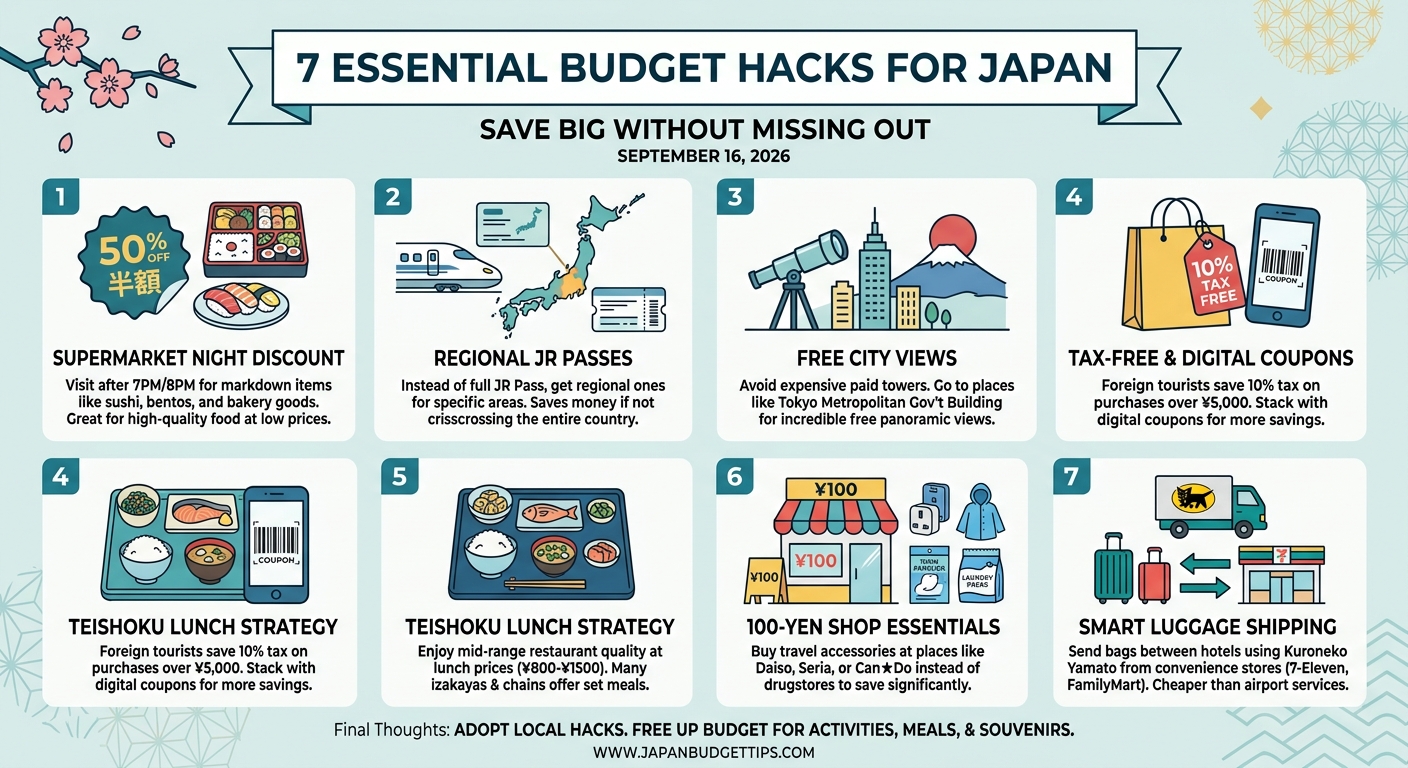
Traveling to Japan is a bucket-list experience for many, but costs can quickly add up if you don’t know the local tricks. The good news? Japan is filled with hidden budget opportunities that locals use every day.
Here are 7 essential budget hacks that will help you stretch your yen much further—without sacrificing the quality of your trip.
1. The Supermarket Night Discount Trick (Waribiki)
If you want high-quality food without paying high restaurant prices, visit Japanese supermarkets after 7:00 PM or 8:00 PM.
As the evening progresses, store staff walk around marking down fresh items like sushi, bento boxes, sashimi, and bakery goods. Look for stickers with numbers like 20% OFF, 30% OFF, or 半額 (Hangaku – Half Price).
- Pro Tip: Department store basements (Depachika) also do this close to closing time (usually around 7:30 PM), offering premium gourmet meals at a fraction of their original price.
2. Ditch the Full JR Pass: Opt for Regional Passes
Following recent price increases, the nationwide Japan Rail (JR) Pass is no longer a guaranteed money-saver for every itinerary. Unless you are crisscrossing the entire country at lightning speed, you will likely lose money on a 7, 14, or 21-day full pass.
Instead, look into Regional Passes tailored to specific areas, such as:
- JR East Pass (Kanto/Tohoku area)
- Kansai Area Pass (Osaka, Kyoto, Nara, Kobe)
- JR-WEST All Area Pass
Alternatively, consider overnight highway buses (like Willer Express) for long distances. They combine transport and accommodation costs into one very affordable ticket.
3. Swap Paid Towers for Free City Views
Observation decks like Tokyo Skytree or Shibuya Sky offer stunning views, but tickets can cost anywhere from ¥2,000 to ¥3,500 per person.
If you’re traveling on a budget, take advantage of Japan’s incredible free panoramic view spots:
- Tokyo Metropolitan Government Building (Shinjuku): Free 45th-floor observation decks with views stretching to Mount Fuji on clear days.
- Ebisu Garden Place Tower (Tokyo): Free 38th/39th-floor sky lounge views.
- Asakusa Culture Tourist Information Center (Tokyo): An 8th-floor terrace overlooking Senso-ji Temple and the Skytree.
4. Combine Tax-Free Shopping with Digital Coupons
Foreign tourists staying in Japan for less than six months can enjoy tax-free shopping (saving 10% on consumption tax) at participating stores when spending over ¥5,000 (excluding tax).
However, you can save even more by stacking digital discount coupons:
- Big retailers like BicCamera, Yodobashi Camera, and Don Quijote regularly offer digital coupons for tourists (usually giving an additional 3% to 7% off).
- Simply save the coupon barcode images on your smartphone and present them at cash registers alongside your passport.
5. Master the “Teishoku” (Set Menu) Lunch Strategy
Dining out in Japan doesn’t have to break the bank if you time your main meal right. Many mid-to-high-end restaurants serve lunch menus (lunch teishoku) for a fraction of their dinner prices.
A typical Teishoku set includes a main dish (grilled fish, tonkatsu, beef, etc.), rice, miso soup, and side dishes for around ¥800 to ¥1,500.
- Look out for casual chains like Yayoi-ken, Ootoya, or Sukiya/Matsuya for reliable, nutritious, and extremely cheap daily meals.
- Local izakayas (pubs) in business districts often serve lunch set meals tailored to local office workers at unbeatable prices.
6. Grab Travel Essentials at 100-Yen Shops
Before buying travel accessories at drugstores or convenience stores, head straight to a 100-yen shop (such as Daiso, Seria, or Can★Do).
These stores sell high-quality, reliable travel goods for just ¥100 to ¥300 (plus tax), including:
- International plug adapters
- Compression bags for luggage space-saving
- Rain ponchos and travel-sized umbrellas
- Portable laundry detergent packs and cable organizers
Buying these small items at 100-yen stores easily saves you ¥2,000–¥3,000 across your trip.
7. Smart Luggage Shipping via Convenience Stores
Taking oversized luggage onto bullet trains or crowded subway lines can be stressful, but using official luggage delivery desks at airports can be pricey.
Instead, send your bags between hotels using Yamato Transport (Black Cat / Kuroneko) directly from neighborhood convenience stores like 7-Eleven or FamilyMart.
- It’s significantly cheaper than airport luggage counters or private transport services.
- Ask your hotel front desk to help fill out the waybill (Denpyo) in Japanese, take it to a nearby convenience store, and travel hands-free for the day!
Final Thoughts
Saving money in Japan doesn’t mean compromising your travel experience. By adopting these local hacks, you’ll free up extra budget for unforgettable activities, bucket-list meals, and unique souvenirs!


comment