Plan your Kyoto trip with real travel times from Kyoto Station, how long each attraction takes, and the temple and dining etiquette every first-time visitor should know.*
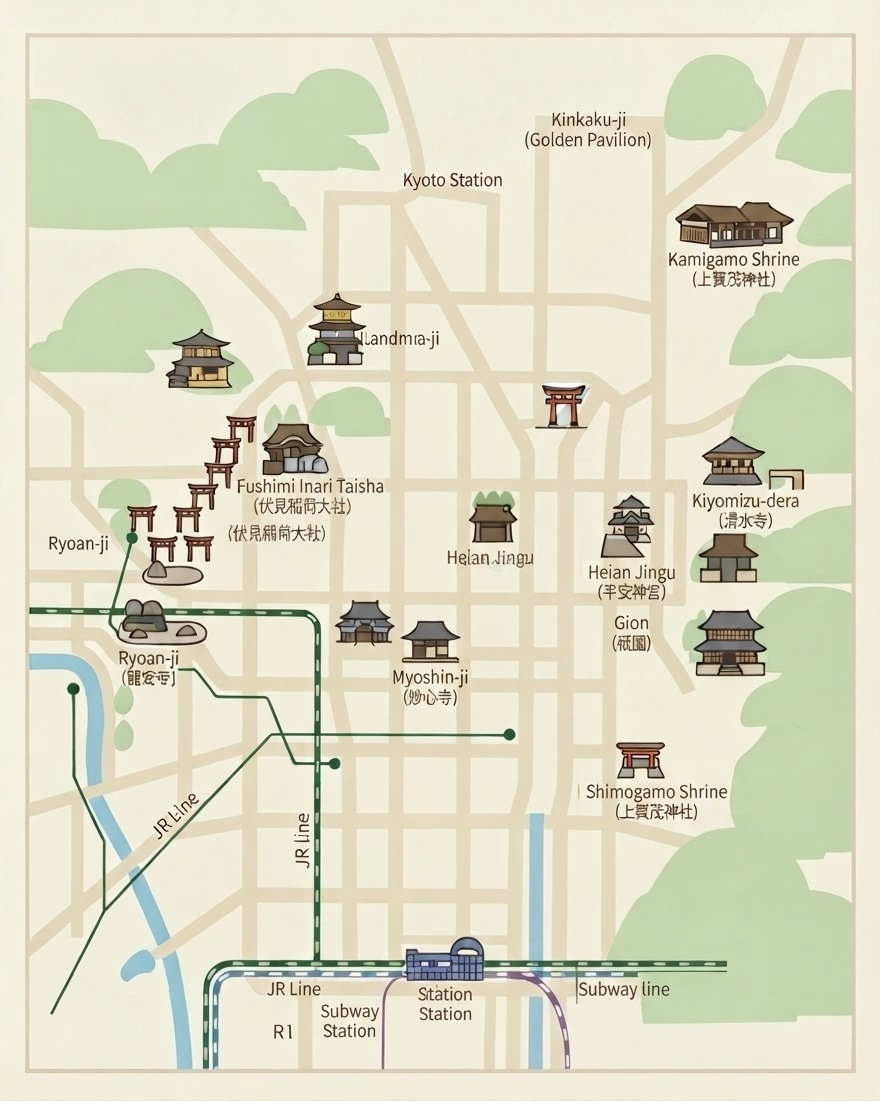
Here’s a mistake almost every first-time Kyoto visitor makes: looking at a map, seeing that Kinkaku-ji and Fushimi Inari are both “in Kyoto,” and assuming you can casually do both before lunch. Then reality hits ? one bus ride runs long, the walk up to a temple takes twice as long as expected, and suddenly it’s 2 PM and you’ve only crossed one thing off the list. Multiply that by a five-day itinerary crammed with a dozen “must-sees,” and you end up spending more of your trip on buses and sidewalks than in front of the places you actually came to see.
The problem usually isn’t ambition ? it’s that Kyoto doesn’t give up its logistics easily. Google Maps will tell you a temple is “20 minutes away,” but it won’t tell you that’s 20 minutes to the nearest bus stop, not the actual entrance up a hillside. It won’t tell you that the bamboo grove which “only takes 15 minutes to walk” turns into 45 once you factor in photos and the crowd shuffling ahead of you. And it definitely won’t tell you that two temples with almost identical names ? Kinkaku-ji and Ginkaku-ji ? sit on completely opposite sides of the city, a mix-up that has quietly ruined more than one carefully planned morning.
This guide fixes that. Below you’ll find real travel times from Kyoto Station, how long to actually budget at each spot, and the temple and dining etiquette that will help you blend in rather than stand out for the wrong reasons.
Kyoto Attractions at a Glance: Distance, Rating & Time Needed
Planning a Kyoto itinerary usually means juggling three questions for every single spot: how far is it, is it actually worth the trip, and how much time should I block off? Here’s the quick-reference table we wish we’d had before our first visit.
| Attraction | Distance/Time from Kyoto Station | Rating | Time Needed |
|---|---|---|---|
| Fushimi Inari Taisha | ~10 min (JR Nara Line to Inari Station, 5 min + short walk) | ★★★★★ 4.5 | 45 min (main gates) ? 2.5 hrs (summit round trip) |
| Kiyomizu-dera | ~30?40 min (bus + short walk, or taxi ~20 min) | ★★★★? 4.5 | 1?1.5 hrs |
| Arashiyama Bamboo Grove | ~20 min (JR Sagano Line, 11 min + 5?10 min walk) | ★★★★ 4.2 | 20?45 min (grove alone); half day (full Arashiyama area) |
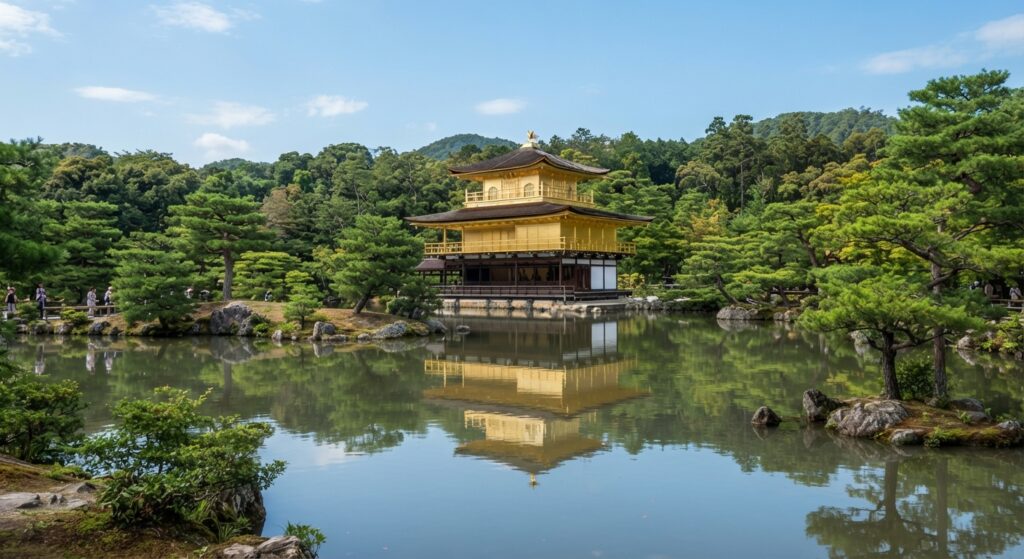
| Kinkaku-ji (Golden Pavilion) | ~35?45 min (subway + bus, or direct bus) | ★★★★? 4.5 | 30?45 min |
| Gion District | ~15?20 min (bus or subway to Gion-Shijo) | ★★★★ 4.3 | 1?2 hrs (evening stroll) |
| Nijo Castle | ~15 min (subway, Tozai Line to Nijojo-mae) | ★★★★ 4.4 | 1?1.5 hrs |
| Nishiki Market | ~10?15 min (subway to Shijo + short walk) | ★★★★ 4.2 | 45 min ? 1 hr |
| Tofuku-ji Temple | ~5?10 min (JR Nara Line, one stop) | ★★★★ 4.3 | 1 hr (longer in autumn foliage season) |
| Ginkaku-ji (Silver Pavilion) | ~35?45 min (bus) | ★★★★ 4.3 | 45 min ? 1 hr |
| Sanjusangen-do | ~10 min (bus, close to National Museum) | ★★★★? 4.5 | 45 min ? 1 hr |
Ratings are approximate composite scores based on major travel platforms and are meant as a general “worth it” indicator, not a precise ranking. Times from Kyoto Station assume normal daytime transit; add 10?15 minutes during rush hour or peak tourist season when buses run behind schedule.
How to Actually Use ThisTable
Group by direction, not by popularity. Fushimi Inari and Tofuku-ji both sit south of the station on the JR Nara Line ? you can hit both in one loop without backtracking. Kinkaku-ji and Ginkaku-ji are on opposite sides of the city despite the similar names, so don’t assume they pair well together.
“Time Needed” is the walk-and-look time, not photo time. If you’re planning to shoot a lot of photos or wait out crowds for a clear shot (especially at Fushimi Inari or the bamboo grove), add 30?50% to these estimates.
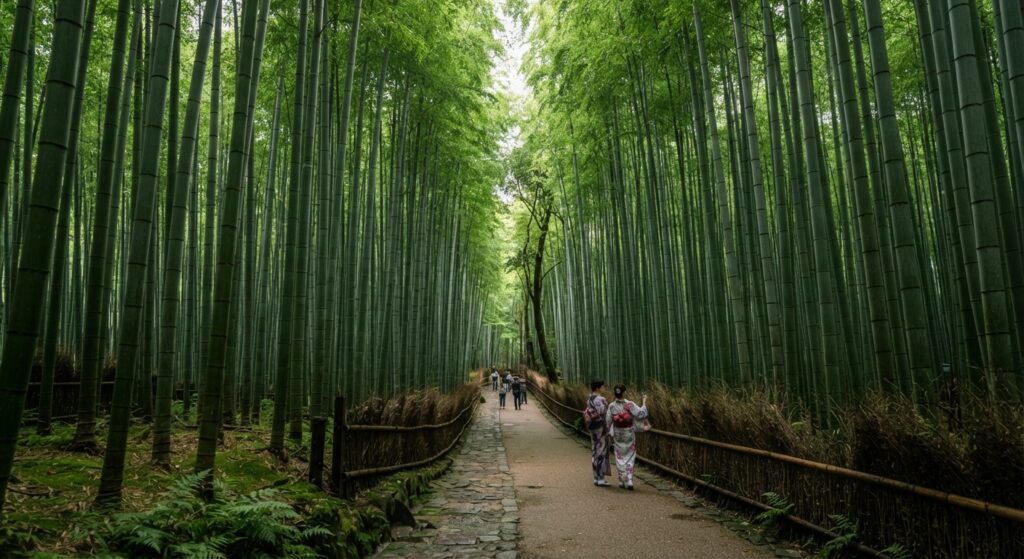
Rating doesn’t equal “must-see for you.” Arashiyama Bamboo Grove rates slightly lower than the temples in most traveler reviews, largely because expectations set by photos don’t always match the reality of a crowded 400-meter path. It’s still worth seeing ? just calibrate your expectations and pair it with a quieter nearby spot like Adashino Nenbutsu-ji.
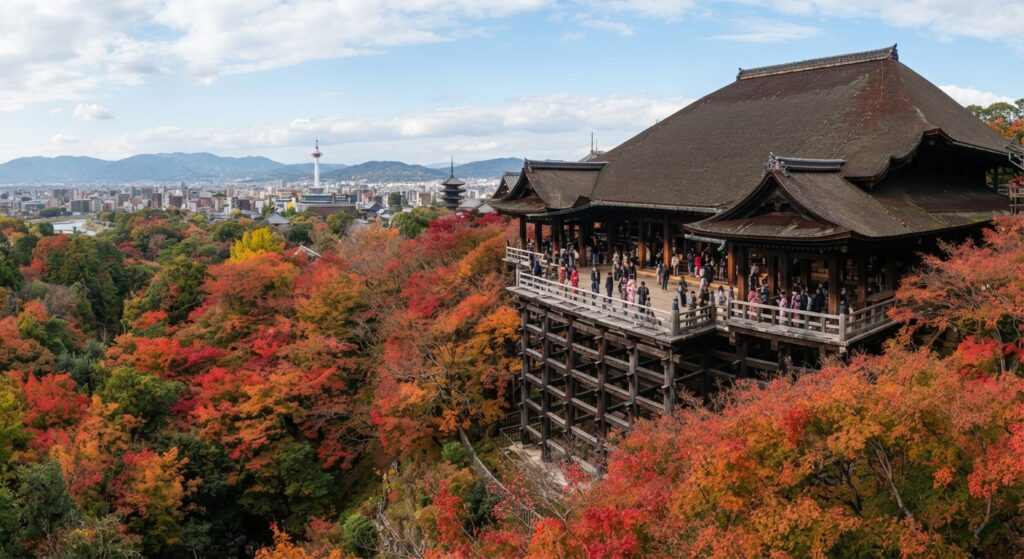
Distance isn’t the same as convenience. Kiyomizu-dera looks close on a map but takes longer than Fushimi Inari in practice, because the temple sits up a hill with no direct train access ? buses and the final walk up Sannen-zaka add real time.
How to Build a Kyoto Itinerary by Zone
Use the table to sort attractions into rough “zones” before you plan a route:
- South/Fushimi zone: Fushimi Inari, Tofuku-ji
- East/Higashiyama zone: Kiyomizu-dera, Gion, Sanjusangen-do
- North zone: Kinkaku-ji, Ginkaku-ji
- West/Arashiyama zone: Bamboo Grove, Tenryu-ji, Togetsukyo Bridge
- Central/Downtown zone: Nijo Castle, Nishiki Market
Pick one zone per half-day rather than crossing the city multiple times ? Kyoto’s charm is in the neighborhoods themselves, and the transit time you save can go straight back into your visit-time budget.
Kyoto Etiquette Guide for First-Time Visitors
Knowing where to go is only half the plan. Kyoto has more working religious sites and traditional dining customs than almost anywhere else in Japan, and a little etiquette goes a long way toward a smoother, more respectful trip.
Temple & Shrine Etiquette in Kyoto
- At shrine entrances (torii gates): Walking through the exact center of the path is traditionally considered the gods’ walkway, not visitors’. A small bow before entering and walking slightly to one side is polite, though nobody will stop you if you forget.
- At the purification fountain (temizuya): Use the ladle to rinse your left hand, then your right, then cup a little water to rinse your mouth (don’t drink from the ladle directly), then rinse the handle itself before setting it down.
- Inside main halls: Photography is often restricted indoors, especially around Buddhist statues or altars ? look for signage, and when in doubt, don’t. Talking is fine, but keep your voice down; these are active places of worship, not museum exhibits.
- Shoes off, always check first: Any area with tatami mats or a raised wooden floor typically requires shoes off. There’s almost always a shelf or bag provided at the entrance.
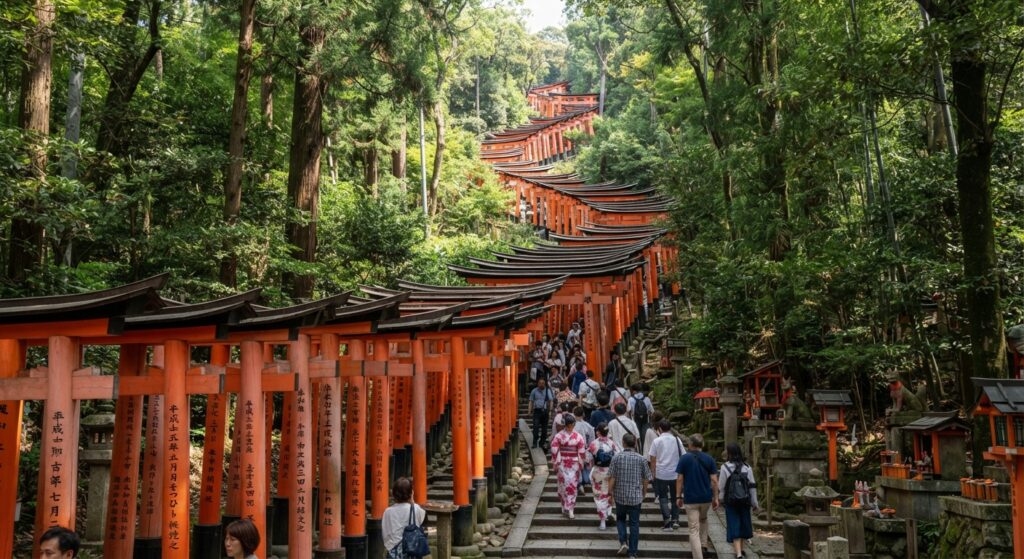
- Don’t touch what you’re not sure about: Statues, prayer items, and offerings are not props. This matters especially at Fushimi Inari, where the fox statues and smaller shrines along the trail are still active objects of worship, not photo backdrops.
Restaurant & Dining Etiquette in Kyoto
- No tipping, ever. Leaving cash on the table is more likely to confuse or mildly embarrass staff than to be appreciated. Good service is simply the standard, not something you pay extra for.
- Don’t stick your chopsticks upright in a bowl of rice. This mirrors a funeral ritual and is one of the few dining habits that genuinely reads as disrespectful rather than just unfamiliar.
- Skip the chopstick-to-chopstick handoff. Passing food directly between two sets of chopsticks echoes a specific cremation ritual ? instead, place food on a shared plate for the other person to pick up.
- Slurping noodles is completely normal, especially with ramen and soba ? it’s not considered rude, and locals do it too.
- Many small restaurants are cash-only, and a lot of counter-style spots use a ticket machine at the entrance: you select and pay for your dish there, then hand the ticket to staff once seated.
- Eating while walking is generally frowned upon, particularly in narrow historic streets like those around Kiyomizu-dera and in Gion. If you buy street food, it’s polite to step to the side and finish it near the stall rather than strolling with it.
Frequently Asked Questions
How much time do I need to see Kyoto’s main attractions?
Budget at least 3 full days to comfortably cover the highlights across Fushimi Inari, Higashiyama (Kiyomizu-dera and Gion), Arashiyama, and the northern temples ? 5 days lets you go at a relaxed pace and add day trips like Nara or Uji.
Which Kyoto attraction is closest to Kyoto Station?
Fushimi Inari Taisha and Tofuku-ji are both around 5?10 minutes away by train, making them the easiest attractions to fit in early in the morning or right before departure.
Is it rude to take photos inside Kyoto’s temples?
It depends on the building ? outdoor grounds are almost always fine to photograph, but many main halls with Buddhist statues restrict photography indoors. Look for posted signs, and default to not photographing when unsure.
Do I need to tip at restaurants in Kyoto?
No. Tipping isn’t part of Japanese dining culture and can come across as awkward rather than generous. The price on the menu is the price you pay.
Ready to build the rest of your Kyoto trip? Pair this guide with a timing strategy for the busiest spots so you’re seeing these attractions at their best, not their most crowded.
And if your first day doesn’t go exactly to plan ? a bus runs late, you mix up a temple name, you linger too long somewhere beautiful ? don’t worry. Kyoto has been welcoming travelers for well over a thousand years, and it’s forgiving of a little trial and error. You’ll find your rhythm faster than you think, and the moments that go a bit sideways often end up being the ones you remember most fondly.
comment